
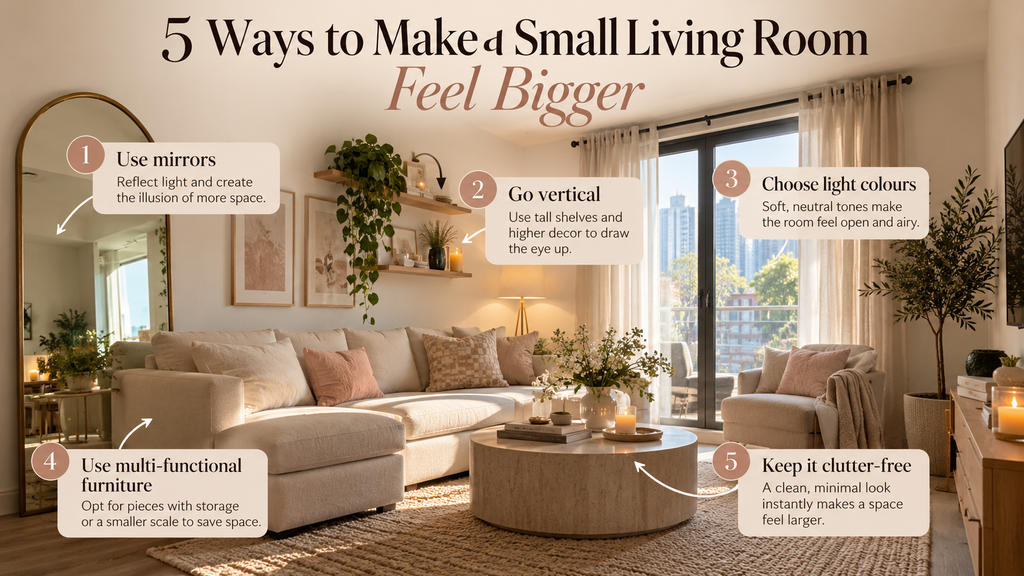
5 Clever Ways to Make a Small Living Room Feel Bigger, Brighter, and More Spacious
A small living room doesn’t have to feel cramped or cluttered. With the right furniture, thoughtful decorating choices, and a few simple interior design tricks, even the smallest space can feel open, airy, and beautifully styled.
Whether you’re decorating a small apartment, refreshing a cozy living room, or trying to maximize limited square footage, these five small living room decorating ideas can make a noticeable difference.
1. Use Mirrors to Create the Illusion of Space
Mirrors are one of the easiest ways to make a small living room feel bigger. Position a large mirror across from or near a window to reflect natural light throughout the room. An oversized arched mirror can also serve as a stylish statement piece while adding visual depth.
2. Take Advantage of Vertical Space
When floor space is limited, think vertically. Install floating shelves, choose tall bookcases, or hang artwork slightly higher to draw the eye upward. Vertical decorating helps emphasize the height of your walls while keeping valuable floor space clear.
3. Choose Light, Airy Colors
Soft whites, warm beiges, creams, and muted pastel tones can make a compact living room feel brighter and more spacious. Layer neutral colors with natural wood, textured fabrics, and subtle decorative accents to create a cozy atmosphere without overwhelming the space.
4. Invest in Multifunctional Furniture
Choose furniture that works harder for your space. Storage ottomans, nesting coffee tables, compact sofas, and furniture with hidden compartments help maximize functionality without sacrificing style. Look for appropriately scaled pieces that leave comfortable walking paths.
5. Keep Surfaces Organized and Clutter-Free
A thoughtfully styled living room often feels larger than one filled with unnecessary decor. Keep coffee tables simple, use decorative baskets for storage, and display a few carefully chosen accessories. The goal isn’t to eliminate personality but to create a balanced, intentional space.
Final Thoughts
Creating a beautiful small living room is all about making thoughtful design decisions. By combining clever storage solutions, space-saving furniture, light colors, and intentional styling, you can transform a compact living area into a welcoming space that feels both functional and spacious.
You don’t need a large home to create a living room you love — just a few smart decorating ideas that make every square foot count.

How to Style a Coffee Table in 3 Simple Steps for a Beautiful, Designer-Inspired Living Room
A beautifully styled coffee table can instantly elevate your living room, making the entire space feel more intentional, inviting, and thoughtfully designed. Whether you love modern minimalist interiors, cozy neutral decor, or a sophisticated contemporary aesthetic, learning how to decorate a coffee table is one of the easiest ways to refresh your home without investing in new furniture.
The secret to effortless coffee table styling is finding the right balance between decorative accessories, varying heights, and functional everyday pieces. With just three simple steps, you can create a coffee table arrangement that looks polished while still feeling comfortable and personal.
Step 1: Start With a Foundation
Begin by choosing one or two larger decorative pieces to anchor your coffee table arrangement. A stylish tray, a stack of hardcover coffee table books, or a beautiful ceramic bowl creates a foundation for the rest of your decor.
Coffee table books are particularly versatile because they add texture, personality, and visual interest while providing a surface for smaller accessories. For a modern, neutral living room, consider books with cream, beige, or muted covers that complement your existing color palette.
Step 2: Add Height, Texture, and Layers
One of the most important coffee table styling tips is to incorporate objects of different heights and textures. Pair a low decorative tray with a taller ceramic vase, a sculptural candleholder, or a small floral arrangement.
Mixing materials such as natural stone, wood, glass, and brass creates visual depth without making the arrangement feel overly busy. Try grouping accessories in odd numbers and leaving some open space so each piece has room to stand out.
Step 3: Finish With Personal Decorative Touches
The final step is adding accessories that make your living room feel uniquely yours. Consider a favorite scented candle, a small sculptural object, fresh flowers, or a decorative keepsake.
These finishing touches help transform a simple coffee table into a curated focal point. Choose pieces that complement your interior design style, whether that’s modern organic, Japandi, contemporary, or cozy traditional decor.
Remember that beautiful coffee table decor should still be functional. Leave enough space for drinks, remote controls, and everyday living.
Final Thoughts
Styling a coffee table doesn’t have to be complicated or expensive. By starting with a strong foundation, layering accessories at different heights, and incorporating a few meaningful decorative pieces, you can create an elegant arrangement that brings your entire living room together.
Whether you’re decorating a small apartment or refreshing a larger living space, these simple coffee table styling ideas will help you achieve a timeless, designer-inspired look.
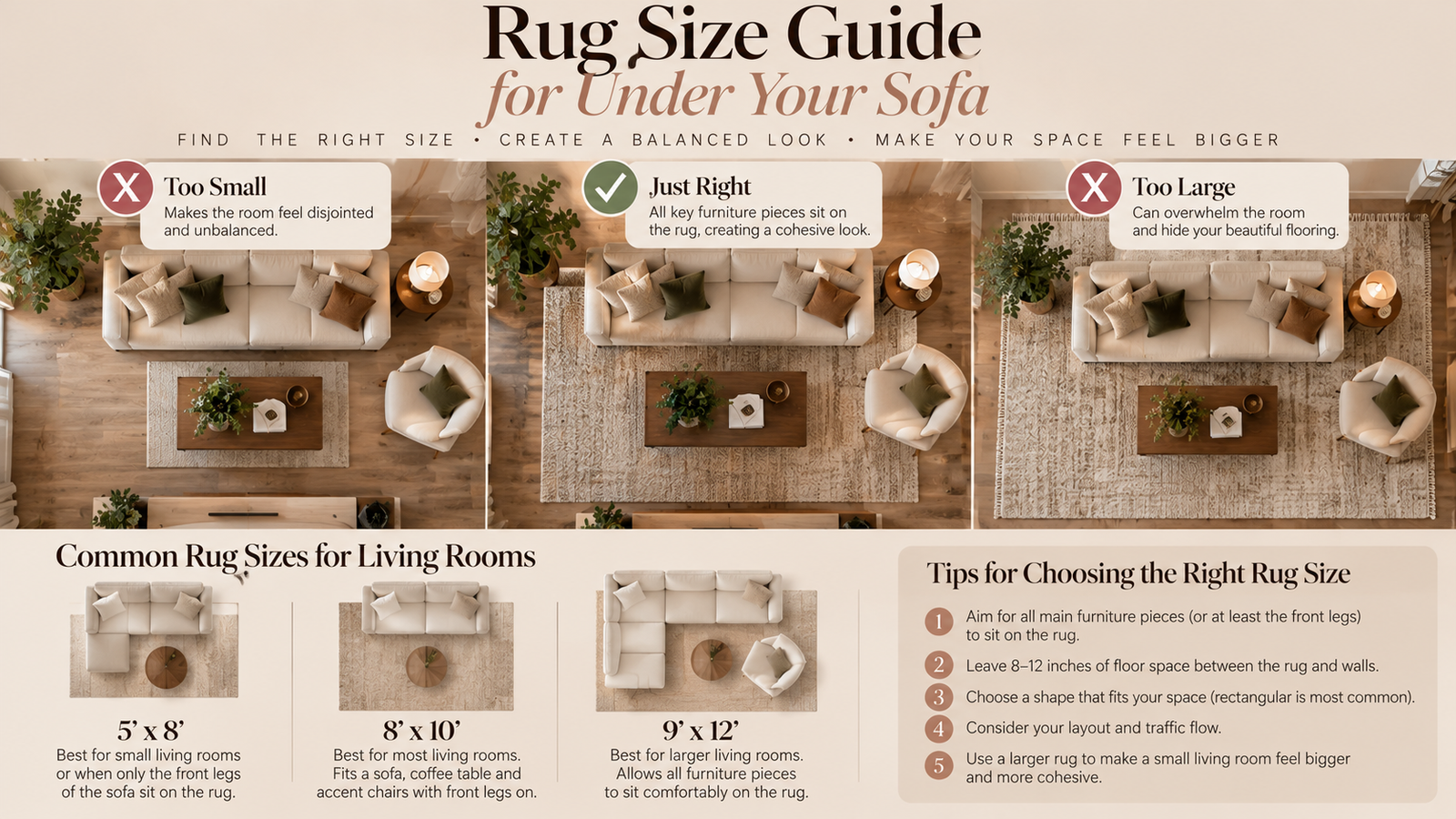
The Ultimate Living Room Rug Size Guide: How to Choose the Right Area Rug for Your Sofa
Choosing the right area rug can completely transform the look and feel of your living room. A properly sized rug helps define your seating area, creates visual balance, and makes your furniture arrangement feel more cohesive. However, choosing a rug that’s too small or placing it incorrectly can make even a beautifully decorated living room feel disconnected.
Whether you’re styling a small apartment, decorating around a sectional sofa, or refreshing a spacious living room, understanding rug sizing and furniture placement is essential.
1. Why Rug Size Matters in Your Living Room
An area rug does more than protect your floors or add texture. It visually connects your sofa, coffee table, and accent chairs, creating a defined seating area.
A rug that’s too small can make your furniture appear disconnected, while a well-proportioned rug can make the entire space feel more intentional and inviting.
2. Understanding Common Living Room Rug Sizes
5′ x 8′ Rug — Best for Compact Living Rooms
A 5×8 rug can work well in smaller living rooms or apartments with compact furniture arrangements. Depending on your sofa dimensions, it may fit beneath the front legs of your sofa or sit centrally beneath your coffee table.
8′ x 10′ Rug — Best for Standard Living Rooms
An 8×10 rug is one of the most versatile options for medium-sized living rooms. It often provides enough space for the front legs of your sofa and accent chairs to rest on the rug, helping create a balanced seating arrangement.
9′ x 12′ Rug — Best for Larger Living Rooms
For spacious living rooms or larger sectional sofas, a 9×12 rug can create a luxurious, cohesive appearance. This size often accommodates an entire seating arrangement, including sofas, coffee tables, and accent chairs.
3. How to Position a Rug Under Your Sofa
There are three common approaches to living room rug placement.
- All furniture legs on the rug: Ideal for larger rooms and oversized rugs, creating a unified seating area.
- Front furniture legs on the rug: A versatile option for many living rooms, connecting the main furniture pieces without requiring an oversized rug.
- Coffee table only on the rug: Sometimes suitable for compact layouts, although it can make the seating area feel disconnected if the rug is disproportionately small.
For most living rooms, placing at least the front legs of your sofa on the rug creates an attractive and balanced arrangement.
4. Common Rug Placement Mistakes to Avoid
One of the biggest living room decorating mistakes is choosing an area rug based solely on the coffee table rather than the entire seating arrangement.
Other common mistakes include positioning a rug too far away from the sofa, choosing a rug that interferes with walking paths, or failing to measure the furniture layout before purchasing.
As a general guideline, aim to leave some visible flooring around the edges of your rug. The exact amount depends on your room dimensions and furniture arrangement.
5. How to Make a Small Living Room Feel Bigger With a Rug
A larger area rug can actually make a small living room feel more spacious. By visually connecting your furniture, it creates a continuous, unified seating area rather than breaking the room into smaller sections.
Choose light neutral colors, subtle patterns, and low-pile textures for an airy, modern aesthetic. Cream, beige, warm gray, and natural woven rugs are especially versatile for minimalist, Scandinavian, and Japandi-inspired interiors.
Final Thoughts
Finding the perfect living room rug is about more than choosing a beautiful pattern or color. The right size and placement can improve the proportions of your space, complement your furniture, and make your living room feel thoughtfully designed.
Before purchasing your next area rug, measure your sofa, consider your seating arrangement, and use these rug sizing guidelines to find a piece that works beautifully with your home.
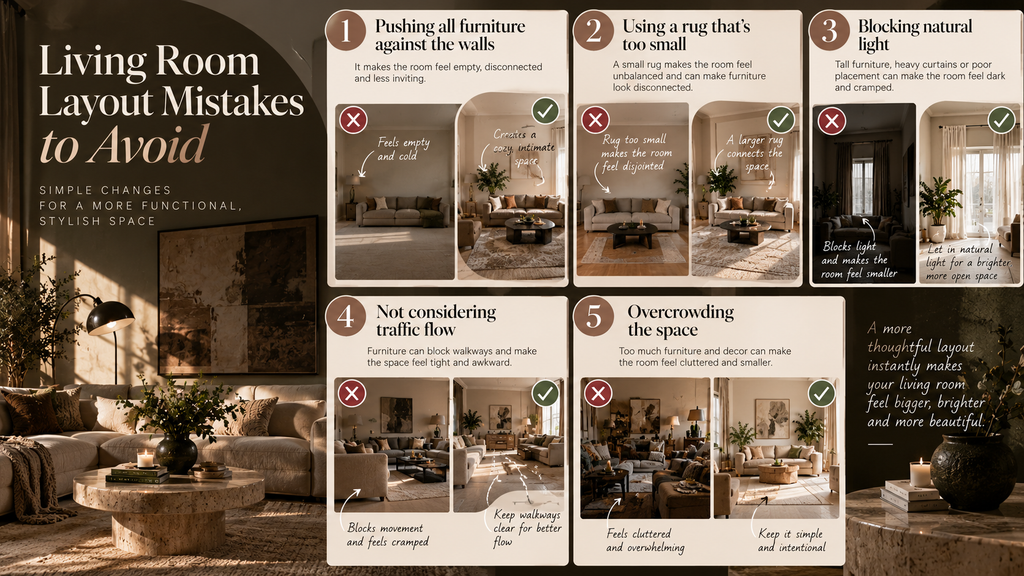
5 Common Living Room Layout Mistakes to Avoid (And How to Fix Them for a More Beautiful Space)
A beautifully decorated living room isn’t just about choosing the perfect sofa, stylish coffee table, or statement artwork. The way you arrange your furniture can have an even greater impact on how your space looks, feels, and functions.
Even the most thoughtfully decorated living rooms can feel cramped, disconnected, or unbalanced when the furniture layout isn’t working.
Whether you’re designing a small apartment living room, refreshing your current space, or planning a complete living room makeover, avoiding these five common layout mistakes can help you create a more inviting and functional home.
1. Pushing All Your Furniture Against the Walls
One of the most common living room layout mistakes is assuming that pushing every piece of furniture against the walls will automatically make a room feel bigger.
While this arrangement can work in certain small spaces, it often creates an awkward, disconnected seating area.
How to fix it: Try pulling your sofa or accent chairs slightly away from the walls to create a more intimate conversation area. Even a few inches of breathing room can make the furniture arrangement feel more intentional.
For larger living rooms, consider floating your sofa toward the center of the space to create distinct functional zones.
2. Choosing an Area Rug That’s Too Small
An undersized area rug can make your living room furniture look disconnected and disrupt the visual balance of the space.
A common mistake is choosing a rug that fits only beneath the coffee table rather than considering the entire seating arrangement.
How to fix it: Select a rug large enough to accommodate at least the front legs of your sofa and main accent chairs whenever possible.
An 8×10 or 9×12 area rug can work beautifully in many living rooms, depending on the dimensions of your space and furniture.
A properly sized rug visually connects your seating area and creates a more cohesive, designer-inspired appearance.
3. Blocking Natural Light With Furniture or Heavy Curtains
Natural light is one of the most valuable elements in interior design. Unfortunately, poor furniture placement and heavy window treatments can make a living room feel darker, smaller, and less inviting.
Placing tall furniture directly in front of windows can limit daylight and create unnecessary visual barriers.
How to fix it: Arrange larger furniture pieces away from windows when possible, and choose light-filtering curtains that allow natural light to enter.
Consider hanging curtains closer to the ceiling to create the illusion of taller windows and higher ceilings.
Mirrors can also help reflect available daylight and make your living room feel brighter.
4. Ignoring Traffic Flow and Walking Space
A living room should be comfortable to move through, not just beautiful to look at.
Oversized coffee tables, poorly positioned accent chairs, and awkward sofa arrangements can create narrow walkways that make the space feel cramped.
How to fix it: Plan your furniture layout around the natural walking paths through your living room.
Aim to leave approximately 30–36 inches of clearance along major walkways where space allows. Around a coffee table, approximately 14–18 inches between the table and sofa is often comfortable.
Choosing furniture that suits the proportions of your room can make everyday movement easier while improving the overall appearance.
5. Overcrowding Your Living Room With Furniture and Decor
Adding too many furniture pieces, decorative accessories, or oversized items can make even a spacious living room feel cluttered.
While layered decor adds personality, excessive furniture can overwhelm the room and reduce its functionality.
How to fix it: Focus on selecting a few statement pieces that complement one another rather than filling every available corner.
Choose multifunctional furniture, incorporate hidden storage, and allow some open space between decorative elements.
A carefully curated living room often feels more sophisticated and welcoming than one filled with unnecessary accessories.
Final Thoughts: Creating a Living Room That Feels Beautiful and Functional
The secret to a well-designed living room isn’t necessarily buying new furniture or investing in expensive decor. Often, small changes to your furniture arrangement can completely transform the space.
By improving sofa placement, choosing the right rug size, maximizing natural light, maintaining clear walking paths, and avoiding overcrowding, you can create a living room that feels larger, brighter, and more balanced.
Whether your personal style is modern minimalist, cozy contemporary, traditional, or Japandi-inspired, thoughtful furniture placement is the foundation of a beautiful living room.
Sometimes, the best living room makeover starts with simply rearranging what you already own.

How to Layer Lighting in a Living Room: The Ultimate Guide to Creating a Warm, Cozy, and Beautifully Lit Space
Lighting is one of the most important elements of interior design, yet it’s often overlooked when decorating a living room. The right lighting can completely transform how a space looks and feels, making it appear warmer, more inviting, and thoughtfully designed.
Whether you’re decorating a small apartment, designing a cozy living room, or refreshing a modern interior, understanding how to layer lighting can help you create a beautifully balanced space.
Instead of relying on a single overhead light, interior designers often combine three essential types of lighting: ambient, task, and accent lighting. Each serves a different purpose, and together they create depth, functionality, and atmosphere.
1. Ambient Lighting: Create Your Foundation
Ambient lighting provides the overall illumination in your living room. It’s the primary source of light that allows you to move comfortably throughout the space and establishes the room’s general brightness.
Common examples of ambient lighting include ceiling fixtures, chandeliers, recessed lighting, and large pendant lights.
How to style it:
Choose a ceiling fixture that complements your interior design aesthetic. A woven pendant light can add warmth to a Japandi-inspired living room, while a sculptural chandelier creates a sophisticated focal point in a contemporary space.
For a cozy atmosphere, consider warm white bulbs around 2700K–3000K and install dimmer switches where compatible. This allows you to adjust the brightness depending on the time of day and activity.
2. Task Lighting: Add Functionality and Comfort
Task lighting provides focused illumination for specific activities, such as reading, working, or relaxing with a book.
Rather than illuminating the entire room, task lighting directs light exactly where it’s needed.
Common examples include floor lamps beside sofas, adjustable reading lamps, and table lamps positioned near accent chairs.
How to style it:
Place a stylish floor lamp beside your sofa or favorite reading chair to create a dedicated relaxation area.
Choose lighting fixtures that complement your furniture and introduce interesting materials, such as brushed brass, ceramic, natural wood, or matte black metal.
For a balanced living room layout, distribute task lighting across different areas rather than concentrating every lamp in one corner.
3. Accent Lighting: Create Depth and Atmosphere
Accent lighting is the finishing touch that gives a living room its personality.
Unlike ambient or task lighting, accent lighting is primarily used to highlight decorative features, architectural details, and statement pieces.
Examples include picture lights above artwork, wall sconces, LED strip lighting inside shelving, and decorative candles.
How to style it:
Use picture lights to draw attention to your favorite artwork or install subtle LED lighting behind floating shelves to create a soft glow.
Decorative table lamps and candles can also introduce warmth and visual interest to coffee tables, sideboards, and shelving.
The goal is to create smaller pockets of light throughout the room, adding dimension and making the space feel more intimate.
4. Choose the Right Light Temperature
One of the simplest ways to make your living room feel cozy is by choosing the right bulb temperature.
Warm white lighting between approximately 2700K and 3000K is a popular choice for residential living rooms because it creates a softer, more relaxing atmosphere.
Cooler lighting can be useful for certain tasks, but overly cool bulbs may make a cozy living room feel less inviting.
For a cohesive look, try to keep the color temperature of your main decorative lights relatively consistent.
5. Position Lighting at Different Heights
A beautifully layered living room incorporates lighting at multiple heights.
Combine ceiling fixtures with mid-level table lamps, taller floor lamps, and lower accent lighting.
This approach helps distribute illumination more evenly while creating visual depth.
For example, a pendant light above the seating area, a floor lamp beside the sofa, and a small table lamp on a sideboard can create a balanced lighting arrangement without overwhelming the room.
6. Use Dimmers to Create Different Moods
Lighting should adapt to how you use your living room throughout the day.
During the morning, brighter ambient lighting can create a fresh and energizing environment.
In the evening, dimmed ceiling lights paired with warm table lamps and subtle accent lighting can create a more intimate, relaxing atmosphere.
Smart bulbs and compatible dimmer switches make it easier to customize your lighting without constantly changing fixtures.
Final Thoughts: The Secret to a Cozy, Designer-Inspired Living Room
Creating a beautifully lit living room doesn’t require expensive renovations or complicated electrical upgrades.
By combining ambient, task, and accent lighting, choosing warm bulb temperatures, and positioning fixtures at different heights, you can transform an ordinary space into a comfortable and sophisticated interior.
Whether your style is modern minimalist, traditional, Japandi, or cozy contemporary, thoughtful lighting can elevate your home and make your living room feel welcoming at any time of day.
The most beautiful living rooms don’t simply have more lighting — they have the right lighting in the right places.
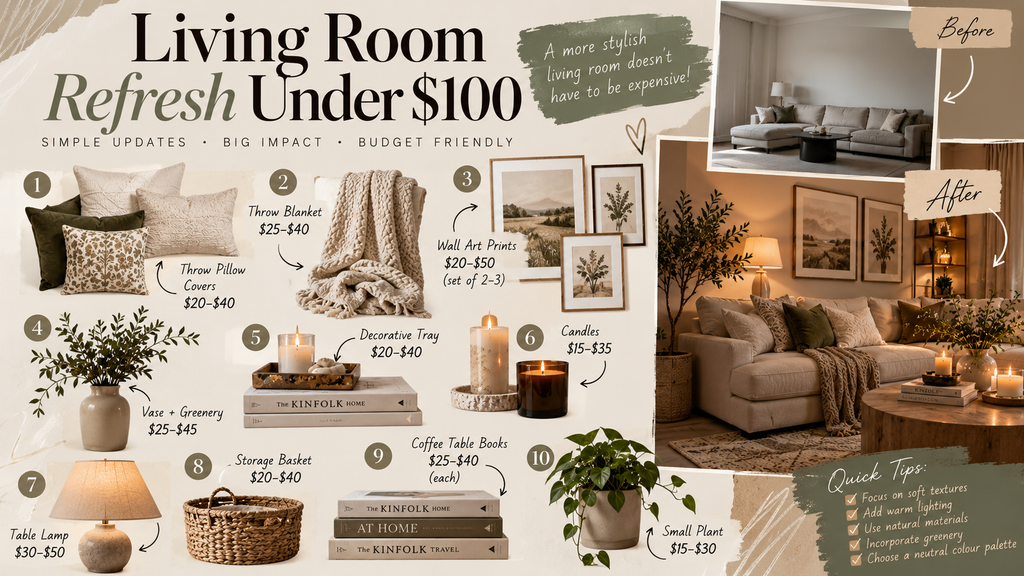
10 Affordable Living Room Decor Ideas to Refresh Your Space for Under $100
Giving your living room a fresh, stylish makeover doesn’t have to involve expensive furniture, major renovations, or a large decorating budget. Sometimes, the smallest changes can make the biggest difference.
Whether you’re decorating your first apartment, refreshing a cozy living room, or simply looking for affordable ways to make your home feel more inviting, there are plenty of budget-friendly home decor ideas that can instantly elevate your space.
From soft textiles and warm lighting to decorative accessories and greenery, these ten affordable living room updates can help you achieve a beautiful, designer-inspired look without overspending.
1. Refresh Your Sofa With Decorative Throw Pillows ($20–$40)
One of the easiest ways to update your living room is by changing your throw pillows. Instead of purchasing an entirely new sofa, introduce fresh colors, interesting textures, and subtle patterns through decorative pillow covers.
For a timeless, sophisticated aesthetic, combine warm neutrals with olive green, muted terracotta, or soft beige accents.
Budget tip: Purchase pillow covers separately and reuse your existing inserts to save money.
2. Add a Cozy Throw Blanket ($25–$40)
A textured throw blanket can instantly make your living room feel warmer and more inviting.
Choose chunky knits, soft woven fabrics, or lightweight cotton throws to introduce dimension and comfort.
Drape your blanket casually over the arm of your sofa or fold it neatly across the back of an accent chair for an effortlessly styled appearance.
3. Decorate With Affordable Wall Art ($20–$50)
Empty walls can make a living room feel unfinished, but decorating them doesn’t require expensive original artwork.
Look for affordable printable wall art, vintage-inspired illustrations, botanical prints, or minimalist abstract designs.
Create a small gallery wall using two or three coordinating prints, or choose one larger statement piece above your sofa.
Budget tip: Download affordable digital prints and reuse frames you already own.
4. Incorporate Greenery and Decorative Vases ($25–$45)
Adding greenery is a simple way to bring life, texture, and natural beauty into your living room.
A ceramic vase filled with seasonal branches, fresh flowers, or faux greenery can become a beautiful focal point on a coffee table, sideboard, or bookshelf.
Choose neutral ceramic finishes, textured stoneware, or vintage-inspired glass vases for a sophisticated look.
5. Style Your Coffee Table With a Decorative Tray ($20–$40)
A decorative tray helps organize smaller accessories while making your coffee table look more intentional.
Use a wooden, marble-look, or woven tray to group candles, decorative objects, and small books.
The key is to create a balanced arrangement without overcrowding the surface.
6. Create Atmosphere With Candles ($15–$35)
Candles are one of the most affordable ways to introduce warmth and ambiance into your living room.
Choose decorative candles in neutral containers, amber glass, or sculptural shapes that complement your interior design style.
Group candles of different heights on a tray or side table to create visual interest.
For a safer everyday alternative, consider flameless LED candles that provide a similar warm glow.
7. Upgrade Your Lighting With a Table Lamp ($30–$50)
Lighting can dramatically change how your living room looks and feels.
A small table lamp with a warm white bulb can make your space feel cozy, sophisticated, and welcoming.
Look for ceramic lamp bases, linen shades, or vintage-inspired designs to add personality without overwhelming your decor.
8. Organize With Decorative Storage Baskets ($20–$40)
Beautiful storage solutions can make your living room feel more organized while adding texture to the space.
Woven baskets are perfect for storing throw blankets, magazines, toys, or everyday essentials.
Choose natural materials such as wicker, rattan, or seagrass to introduce warmth and an organic design element.
9. Decorate With Coffee Table Books ($25–$40 Each)
Coffee table books are a timeless styling accessory that can make a living room feel curated and sophisticated.
Choose books about architecture, photography, fashion, travel, or interior design that reflect your personal interests.
Stack two or three books together and finish the arrangement with a small decorative object.
Budget tip: Browse thrift stores and secondhand bookstores for beautiful hardcover books at a fraction of their original price.
10. Add a Small Indoor Plant ($15–$30)
Indoor plants are an affordable way to add freshness, color, and personality to your living room.
Low-maintenance varieties such as pothos, snake plants, or ZZ plants work beautifully in many interior styles.
Place a small plant on a bookshelf, side table, or windowsill to soften your space and introduce a natural element.
How to Refresh Your Living Room for Less Than $100 Total
You don’t need to purchase all ten items to create a noticeable transformation. Instead, select a few affordable accessories that work together.
Here’s an example of a simple $100 living room refresh:
- Decorative pillow covers: $20
- Cozy throw blanket: $25
- Small indoor plant: $15
- Decorative candle: $15
- Affordable wall art print: $20
Estimated total: $95 before applicable taxes.
By focusing on a few carefully selected accessories, you can create a cohesive, stylish look while staying within your decorating budget.
Final Thoughts: Beautiful Living Room Decor Doesn’t Have to Be Expensive
Creating a cozy, sophisticated living room is less about how much money you spend and more about how thoughtfully you decorate.
Layering soft textiles, incorporating warm lighting, choosing versatile decorative accessories, and adding natural elements can completely transform the atmosphere of your home.
Whether you love minimalist interiors, modern organic design, cozy traditional decor, or contemporary apartment styling, these affordable living room ideas can help you refresh your space without breaking the bank.
Sometimes, a few simple changes are all it takes to make your living room feel brand new.

How to Hang Curtains to Make Your Living Room Look Taller, Brighter, and More Spacious
One of the easiest ways to make your living room feel bigger and more elegant is by changing how you hang your curtains. This simple interior design trick can create the illusion of taller ceilings, larger windows, and a brighter, more open space without requiring expensive renovations.
Whether you’re decorating a small apartment or refreshing a cozy living room, proper curtain placement can make a noticeable difference.
1. Hang Your Curtain Rod Higher
Instead of installing your curtain rod directly above the window frame, position it closer to the ceiling. As a starting point, aim for approximately 4–6 inches below the ceiling, depending on your room’s proportions.
This draws the eye upward and creates the appearance of taller walls and higher ceilings.
2. Choose Floor-Length Curtains
Curtains that reach the floor create long, uninterrupted vertical lines, making your living room feel more spacious and sophisticated.
For a polished appearance, choose curtains that lightly touch the floor or hover just above it. Avoid curtains that end awkwardly above the floor, as they can visually shorten your walls.
3. Extend Your Curtain Rod Beyond the Window
Installing your curtain rod approximately 8–12 inches beyond each side of the window, where wall space allows, helps create the illusion of wider windows.
This also allows the curtains to sit beside the glass when opened, maximizing natural light and making your living room feel brighter.
4. Choose Light, Airy Fabrics
For a soft and timeless aesthetic, consider linen, cotton, or light-filtering curtains in neutral shades such as ivory, cream, warm white, or beige.
These fabrics complement modern, minimalist, Scandinavian, and Japandi-inspired living rooms while maintaining an open, inviting atmosphere.
Final Thoughts
You don’t need high ceilings or oversized windows to create a beautiful, spacious living room. By hanging your curtains higher and wider, choosing floor-length panels, and allowing natural light to flow into your space, you can achieve an elegant, designer-inspired look with just a few simple changes.
Sometimes, the smallest decorating adjustments make the biggest visual impact.
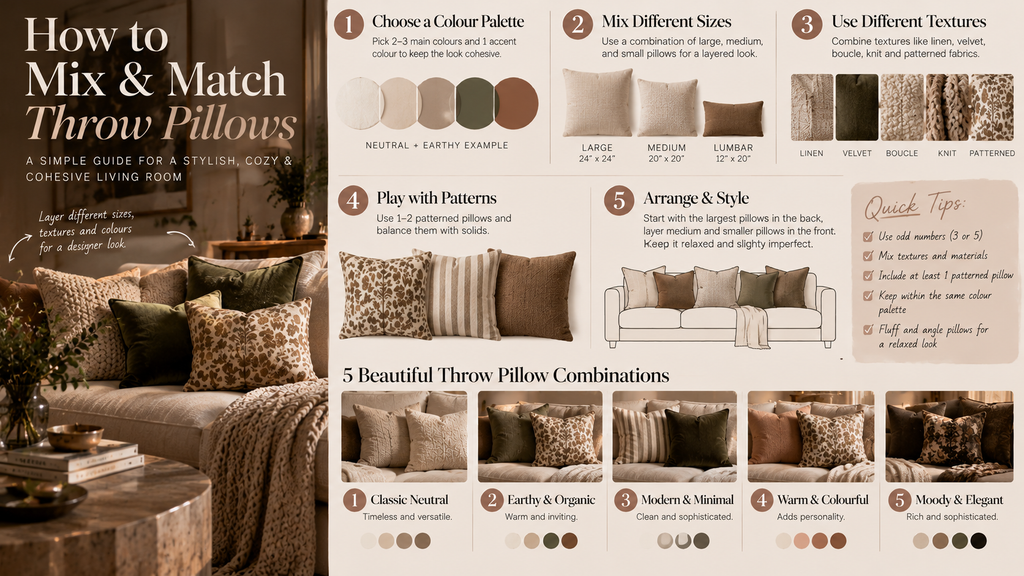
How to Mix and Match Throw Pillows: 5 Simple Styling Tips for a Beautiful, Designer-Inspired Sofa
Throw pillows are one of the easiest and most affordable ways to transform your living room. Whether you’re styling a neutral sofa, refreshing your apartment decor, or creating a cozy, designer-inspired interior, the right combination of pillows can instantly make your space feel more polished and inviting.
The secret to beautiful sofa styling is balancing colors, sizes, patterns, and textures without making your arrangement look overly coordinated.
1. Start With a Cohesive Color Palette
Choose two or three main colors and one accent shade to create a balanced look. Neutral tones such as cream, beige, taupe, and warm brown pair beautifully with earthy accents like olive green, terracotta, or muted rust.
For a timeless aesthetic, repeat colors already present in your living room through your rug, artwork, or furniture.
2. Mix Different Pillow Sizes
Using pillows of varying sizes creates dimension and makes your sofa look thoughtfully styled.
Start with larger 22×22 or 24×24 pillows at the back, layer medium 20×20 pillows in front, and finish with a smaller lumbar pillow for added interest.
This arrangement creates a comfortable, layered look without appearing cluttered.
3. Combine Different Textures
Texture is essential when decorating with throw pillows, especially in neutral living rooms.
Try combining soft linen, velvet, chunky knit, bouclé, and woven fabrics. Mixing materials adds visual depth and warmth, even when you’re working with a simple color palette.
4. Balance Patterns With Solid Colors
Patterns bring personality to your living room, but too many competing designs can overwhelm the space.
Combine one or two patterned pillows with solid-colored cushions to create balance. Stripes, subtle florals, geometric prints, and organic patterns work beautifully when they share similar colors.
5. Arrange Your Pillows Naturally
For a relaxed, designer-inspired appearance, place larger pillows toward the outside corners of your sofa and layer smaller cushions toward the center.
Try using three or five pillows, depending on your sofa size, and avoid making the arrangement overly symmetrical if you prefer a casual aesthetic.
5 Beautiful Throw Pillow Color Combinations to Try
- Classic Neutral: Cream, beige, taupe, and warm brown.
- Earthy & Organic: Olive green, sand, rust, and ivory.
- Modern Minimalist: White, charcoal, and soft gray.
- Warm & Colorful: Terracotta, dusty rose, camel, and cream.
- Moody & Elegant: Chocolate brown, forest green, black, and beige.
Final Thoughts
Beautiful throw pillow styling doesn’t require expensive accessories or perfectly matching sets. By combining complementary colors, mixing textures, experimenting with patterns, and layering different sizes, you can create a sophisticated sofa arrangement that feels cozy and personal.
Whether your living room aesthetic is modern, minimalist, traditional, or Japandi-inspired, these simple throw pillow styling tips can help bring your entire space together.
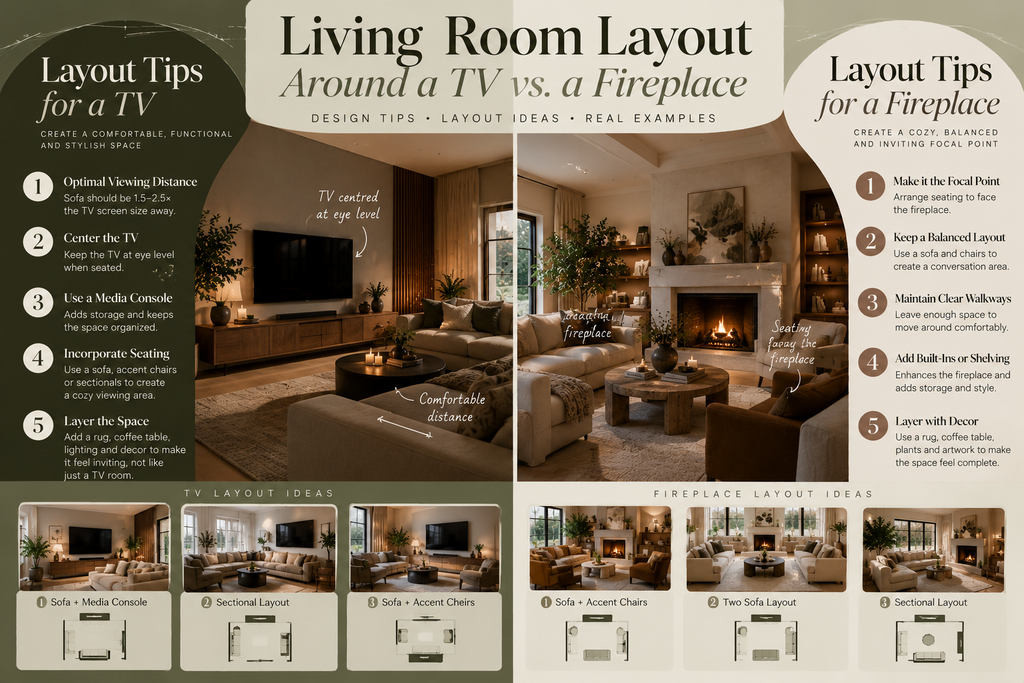
Living Room Layout Ideas: How to Arrange Furniture Around a TV vs. a Fireplace
Creating the perfect living room layout starts with deciding what you want your space to revolve around. For some homes, the television is the main focal point, while others feature a beautiful fireplace that naturally draws attention.
Both arrangements can create a stylish, functional living room, but each requires a slightly different approach to furniture placement, seating, and overall design.
Whether you’re decorating a small apartment, arranging a sectional sofa, or designing a cozy family living room, these layout tips will help you make the most of your space.
1. Designing a Living Room Around a TV
A TV-focused living room should prioritize comfortable viewing angles, practical furniture placement, and a balanced arrangement.
Position your sofa or sectional directly across from the television whenever possible, ensuring that the screen is at a comfortable viewing height.
Consider using a media console beneath your TV to provide additional storage while keeping cables, electronics, and accessories organized.
Design tip: Avoid placing seating too far from the screen or at uncomfortable angles. The ideal viewing distance depends on your television’s size, resolution, and personal preference.
2. Designing a Living Room Around a Fireplace
A fireplace creates a natural focal point and can make a living room feel warm, welcoming, and sophisticated.
Arrange your sofa and accent chairs to face or surround the fireplace, creating an intimate conversation area.
For larger rooms, consider positioning two sofas opposite each other with a coffee table in between, allowing the fireplace to anchor the arrangement.
Design tip: Keep furniture a safe distance from the fireplace and use complementary artwork, shelving, or decorative accessories to highlight the architectural feature.
3. Choosing the Right Furniture Arrangement
For TV-centered spaces, sectional sofas and traditional sofa-and-chair combinations work beautifully because they provide comfortable seating with clear views of the screen.
For fireplace-focused living rooms, symmetrical furniture arrangements often create a balanced and elegant appearance.
If your living room features both a television and fireplace on different walls, consider an L-shaped seating arrangement or swivel accent chairs to accommodate both focal points.
4. Balance Functionality With Style
Regardless of your focal point, a well-designed living room should allow comfortable movement and feel visually cohesive.
Use an appropriately sized area rug to connect your seating arrangement, position a coffee table within easy reach, and incorporate layered lighting for a cozy atmosphere.
Avoid overcrowding the room with oversized furniture, and leave clear pathways between major pieces.
Final Thoughts
Whether your living room is centered around a TV or fireplace, the best layout is one that balances comfort, functionality, and personal style.
By choosing the right furniture arrangement, maintaining clear walking paths, and creating a strong focal point, you can design a living room that feels welcoming, organized, and beautifully put together.
The perfect living room isn’t just about how it looks — it’s about how comfortably it works for your everyday life.

10 Cozy Fall Living Room Decor Ideas to Create a Warm, Inviting Autumn Retreat
Fall is the perfect season to refresh your living room and create a warm, cozy atmosphere. With a few thoughtful decorating touches, you can transform your space into an inviting autumn retreat without completely changing your furniture or spending a fortune.
Here are 10 simple fall living room decorating ideas to inspire your seasonal refresh.
1. Layer Cozy Textiles: Add chunky knit blankets, soft throws, and textured pillows to make your sofa feel extra comfortable and inviting.
2. Incorporate Warm Lighting: Use table lamps, warm white bulbs, and candles to create a soft, relaxing glow throughout your living room.
3. Bring in Natural Elements: Decorate with wooden accessories, ceramic vases, dried branches, and seasonal foliage for an organic autumn aesthetic.
4. Add Seasonal Accents: Incorporate decorative pumpkins, dried flowers, and subtle fall accessories without overwhelming your space.
5. Style a Fall Coffee Table: Create a beautiful arrangement using coffee table books, candles, decorative trays, and a small seasonal centerpiece.
6. Use Earthy Fall Colors: Introduce warm shades of rust, terracotta, olive green, chocolate brown, and beige through pillows, blankets, and decorative accessories.
7. Mix Different Textures: Combine linen, velvet, woven baskets, natural wood, and ceramic decor to add warmth and visual interest.
8. Refresh Your Wall Art: Swap bright summer artwork for warm landscapes, vintage-inspired prints, or moody autumn photography.
9. Incorporate Greenery: Style your shelves and tables with indoor plants, dried eucalyptus, or autumn branches to bring nature indoors.
10. Add Personal Touches: Display your favorite books, meaningful decorative objects, and cozy accessories to make your living room feel welcoming and lived-in.
Final Thoughts
Creating a cozy fall living room doesn’t require an expensive makeover. By layering warm textures, incorporating seasonal colors, and adding soft lighting, you can create a beautiful autumn-inspired space that feels both stylish and comfortable.
The best fall decor combines seasonal charm with timeless pieces you can enjoy throughout the year.